
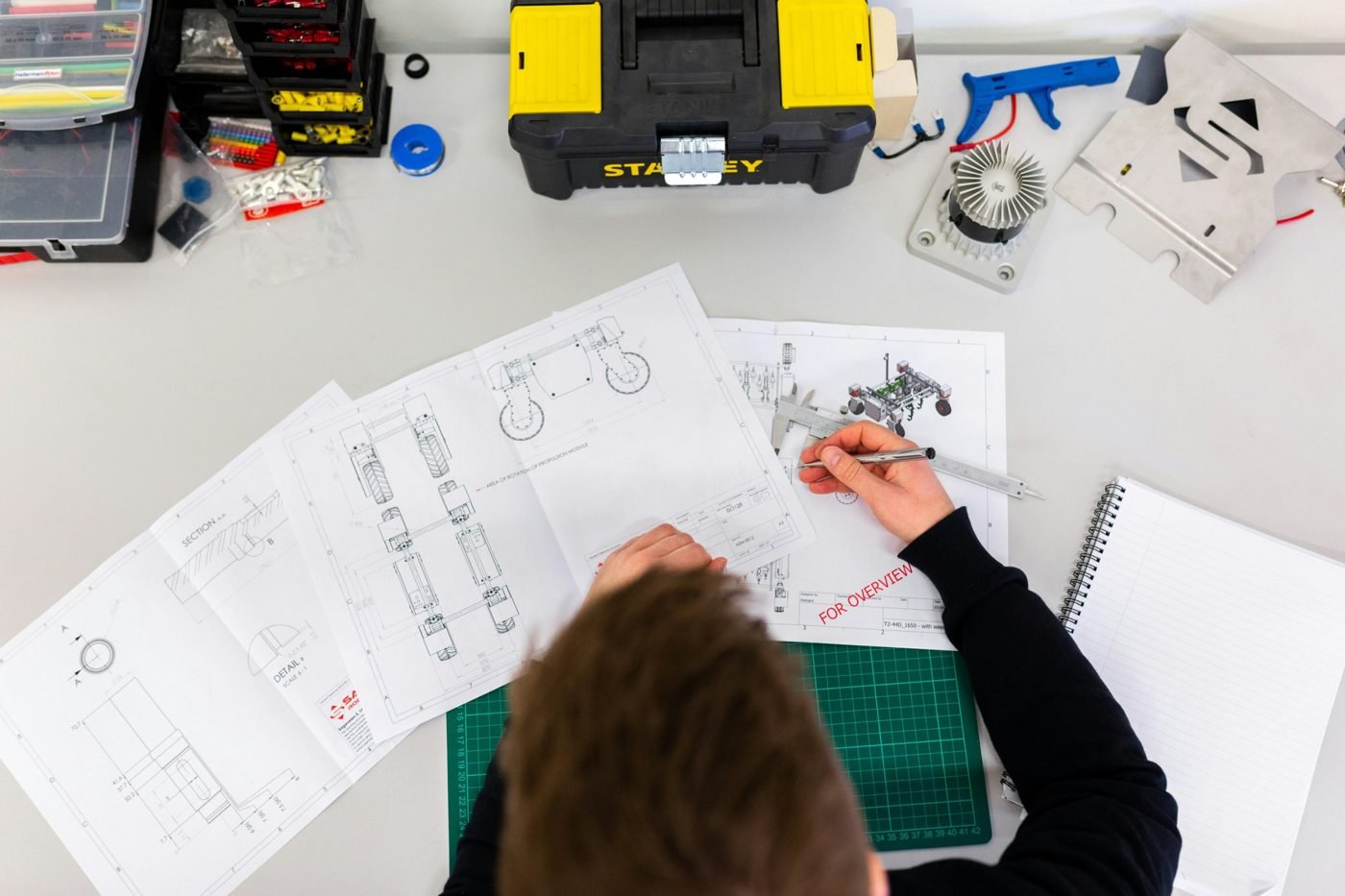
In more than 26 years as a mechanical engineer, I've learned one thing above all: programs rarely fail in testing. They fail months earlier, on a drawing that was released too soon.
By the time a part reaches a supplier, its cost, quality and lead time are mostly locked in. A tolerance nobody challenged becomes a premium quote. A datum chosen for CAD convenience becomes scrap at incoming inspection. A missing material callout becomes a field failure two years later.
That's why every design that leaves Mesan Consulting goes through the same release review. It's built on Design for Six Sigma discipline, and it's the same standard I apply whether the part is a simple bracket or a hydraulic manifold for a transmission control system. Here are the seven checks, so your team can use them too.
1. Is it designed for the process that will actually build it?
Every manufacturing process has rules: draft for castings, wall thickness for molding, tool access for machining. I confirm the production process before detailing, not after. A design that ignores its process gets redesigned by the supplier, on your schedule and at your expense.
2. Does every tight tolerance justify its cost?
Each unnecessary tolerance adds machining time, inspection and supplier risk. I challenge every critical dimension with one question: what fails if this varies a little more? When the answer is "nothing," the tolerance opens up and the part price comes down.
3. Do the datums reflect function and fixturing?
GD&T is only as good as its datum scheme. The primary datum should be the surface the part locates on in the assembly, and ideally the one the supplier can fixture from. Get this right and inspection results mean something. Get it wrong and good parts get rejected while bad ones pass.
4. Has the stack-up been run on every critical fit?
Parts can each be in tolerance and still not assemble. For seals, bearings and any clearance that must never close, I run the full tolerance stack-up across the chain of parts. It takes hours, and it prevents the kind of surprise that stops a production line.
5. Can it be assembled correctly, and only correctly?
I review every design from the assembly operator's point of view: tool access, fastener reach, clearances, orientation. If a part can be installed backwards, eventually it will be. Designing that possibility out costs almost nothing at this stage.
6. Is the material specification complete?
A callout must name the alloy, its temper or heat treatment, the finish or coating, and the governing standard. An incomplete spec hands the decision to the supplier, and the supplier will choose cost.
7. Could a capable shop build it right with no phone call?
This is my final test. If an unfamiliar supplier can produce the correct part from the drawing alone, the design is ready. Every question they would need to ask is a risk still sitting on the page.
What this means for your program
These checks aren't complicated. What makes them work is experience: knowing where problems hide, and having the discipline to look every time. When clients bring Mesan in before release, they get designs suppliers can quote confidently, build right the first time and deliver on schedule.
Preparing a design for release or supplier quotes? Let's review it together before it costs you money.
Book a technical consultation